
Behavior & Training
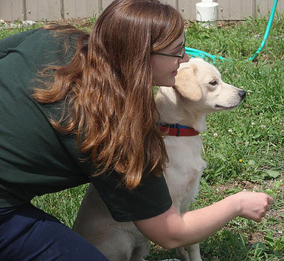
Behavior and Training Services
We created our Behavior and Training department to improve the welfare of animals in our shelter and educate our community about companion animal behavior and animal-friendly training.
For Animals at the Shelter
At our shelter, staff focus on assessing and modifying dog behavior, training our volunteers, making good dog adoption matches, and providing behavior advice to cat and dog guardians. Our behavior modification program can help set shelter dogs up for success in new, loving homes.
Dogs come into the shelter for many reasons, from many walks of life. Some of the dogs we meet at the shelter are under-socialized. They might not be accustomed to being touched, walking on leash, being around a variety of people, everyday items, indoor living, or other dogs. We work to modify dogs’ fear in order to modify their fearful behavior. While we might not be successful with all of them, many dogs undergo huge transformations between when they enter and leave our doors.
Cats, too, often enter the shelter under-socialized and scared. Not only do we need to modify the fear they had before entering the shelter, we need to help them get comfortable in the shelter environment and teach them desirable behavior pays off!
Our animals are assessed with information starting with behavior history from owners and finders and going through to their interactions with multiple people over multiple days. Our behavior assessment is not a ten minute checklist, but a more comprehensive look at the animal over time. We might assess a dog throughout the inside of the shelter, walking outside of the shelter, and even on outings to the park or West Cliff Drive (Public assessing is done by our behavior & training coordinator.). We perform behavior assessments in order to evaluate animals’ needs, best set them up for success with their adopters, and keep our community safe.
Environmental enrichment is designed for captive animals, whether in a zoo, shelter, or house. While our environmental enrichment might be Netflix or sketching, dogs’ and cats’ might be food puzzle toys, rotating new toys, social time with humans and other members of their species, calming music, sleepovers, and outings to breweries or our outdoor Catio. Enrichment can help build confidence in timid animals and build social skills! Plus, coming up with creative enrichment is enriching for us humans!
If you’d like to help us with this effort, click here for link to our Amazon Enrichment Wish list.
If you’re about to enter into a long-term relationship with someone, checking out how compatible you are beforehand is a good idea, right? This could be the next 15 years living together! Through assessing our animals’ behavior, discussing adopters’ preferred lifestyles with their pet, and a boatload of experience, we seek to make happy adoption matches!
Some dogs need a more detailed User Manual. We provide pre-adoption counseling to set the dogs and their adopters up for success by explaining simple management and modification techniques. It’s kind of like letting you know it’s sunny so you have your sunglasses before you go outside, or letting you know it’s going to rain so you take your raincoat. With a little preparation, you know what to expect and can be comfortable going about your day.
We are proud to offer an extensive volunteer training program! Volunteers are mentored by seasoned volunteers and our behavior & training coordinator.
Some of our volunteer class topics include:
- Dog body language and handling (including puppies and rowdy adolescents)
- Low Stress Handling for Fearful Dogs
- Special Topics: Dog Training, How Dogs Have Changed Over Time
- Cat and Dog Adopter Introductions
- Kitten Socialization and Raising “Purrfect” Kittens
- Low Stress Handling for Cats in the Shelter
- Cat Training
Behavior Help for the Public
While the Shelter doesn’t offer any training and behavior resources, there are many local trainers that can work with you on your needs!
There are a lot of sources of information out there on why animals behave the way they do and how we should change their behavior. Some sources are much better than others! With the help of scientific research, our knowledge of how dogs think, their motivations, their emotions, and how we should train them has expanded greatly over the last few decades. Join us to learn to interpret dog and cat body language and gain a better understanding of who dogs and cats are, their needs, and how they experience the world.
Behavior & Training Resources
Positive Reinforcement Training
http://www.humanesociety.org/animals/dogs/tips/dog_training_positive_reinforcement.html
American Veterinary Society of Animal Behavior’s Position Statements
https://avsab.org/resources/position-statements/
Dogs
Common Dog Behavior Issues ASPCA
https://www.aspca.org/pet-care/dog-care/common-dog-behavior-issues
Dog Star Daily (Website of Veterinary Behaviorist Dr. Ian Dunbar)
Housetraining (Dogs)
http://www.humanesociety.org/animals/dogs/tips/housetraining_adult_dogs.html
Fearful Dogs
Cats
Varied Info from the Ohio State University Veterinary School
https://indoorpet.osu.edu/cats?
Common Cat Behavior Issues ASPCA
https://www.aspca.org/pet-care/cat-care/common-cat-behavior-issues
Jackson Galaxy’s Tips